|
The Journey
One day you finally knew what you had to do, and began, though the voices around you kept shouting their bad advice-- though the whole house began to tremble and you felt the old tug at your ankles. "Mend my life!" each voice cried. But you didn't stop. You knew what you had to do, though the wind pried with its stiff fingers at the very foundations, though their melancholy was terrible. It was already late enough, and a wild night, and the road full of fallen branches and stones. But little by little, as you left their voices behind, the stars began to burn through the sheets of clouds, and there was a new voice which you slowly recognized as your own, that kept you company as you strode deeper and deeper into the world, determined to do the only thing you could do-- determined to save the only life you could save Mary Olivers.
0 Comments
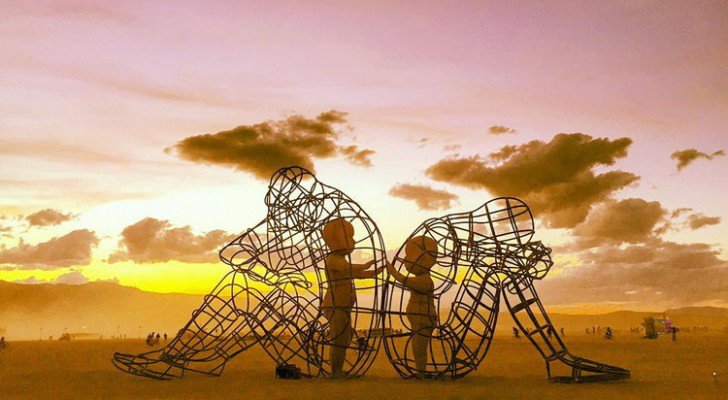
This wonderful sculpture really speaks volumes. It depicts 2 people not connecting perhaps one or the other is angry, disappointed, shamed, hurt, sad, scared etc and disconnected from each other. The small figures inside the two adults resemble children reaching out to one another. These small figures represent the adults inner selves. The inner child is reaching out to each other for understanding, care, nurture, connection and most of all love. The inner child is always present and ever seeking connection and love.
The sculpture reveals to people that despite our outer differences deep down we all yearn for the same thing "love". The sculpture is a beautiful expression of love and truth. The forgiving, open, loving and free spirit of children is our true nature. Inner child work may be challenging at times, but the positive impact and rewards are tremendous. Dance first. Think later. It's the natural order. Samuel Beckett

So much can be revealed to us when we listen to the language of our bodies. Our bodies are always speaking, sending us messages through the way we move, the sensations that arise from within, and the gestures and expressions that we make when we are communicating with others. Tuning in to the language of our bodies can be very enlightening, especially as most communication is believed to take place nonverbally. It is also believed that the body never lies, and that if we want to know the truth about ourselves and others, then we should listen to what our bodies have to say. Anyone who has ever flirted with someone they are attracted to has probably, at one point in time or another, brushed their hands through their hair or found themselves leaning forward to get closer to that person. Someone feeling defensive will tend to cross their arms over their chest, while a person who wants to withhold something may look away when speaking. If you want to know how you truly feel about a person or a situation, then it is a good idea to tune in to what you are feeling inside. Excitement, nervousness, anxiety, and fear are just some of the messages that your body wants you to hear. Your body can also be a very reliable compass. Anyone who has ever been somewhere they don't want to be has probably experienced their bodies trying to move them away from that particular circumstance. And while it can be very easy to talk ourselves into and out of choices we may make with our minds, it isn't so easy to change the truth of our hearts that reside within our bodies. To begin tuning in to this subtle form of communication, start taking the time to notice what your body is telling you. Greet each feeling or sensation as a message carrying wisdom from your body. Tune in to what your body is telling you about the situations and people you encounter and listen to what others are communicating to you through their bodies. We already are subconsciously receptive to the language of our bodies, but when we choose to consciously pay attention, we hear and understand so much more about ourselves and the people around us. The Guest House
This being human is a guest house. Every morning a new arrival. A joy, a depression, a meanness, some momentary awareness comes as an unexpected visitor. Welcome and entertain them all! Even if they’re a crowd of sorrows, who violently sweep your house empty of its furniture, still, treat each guest honorably. He may be clearing you out for some new delight. The dark thought, the shame, the malice, meet them at the door laughing, and invite them in. Be grateful for whoever comes, because each has been sent as a guide from beyond. – Jelaluddin Rumi In this poem The Guest House, Rumi uses the metaphor of a house guest to create an image that each day we have the opportunity to welcome something new into our lives, even if it is unexpected. And just like the house guests who can cause us to feel uncomfortable with their visit, unwelcome feelings that we are afraid of will also call to us - often unexpectedly. We wait impatiently for these house guests to leave so we can put our house back just like it was before they arrived. However, underneath the irritation and uncertainty can live incredible value when we take the time to receive these feelings with humility and courage. Rumi’s poem is a good reminder to embrace change, face our fears and use our bodies as a guest house to welcome whatever, and whoever, drops-in on us. REALITY OF FEAR:
You’re not scared of the dark; you’re scared of what’s in it. You’re not afraid of heights; you’re afraid of falling. You’re not afraid of the people around you; you’re afraid of rejection. You’re not afraid to love; you’re just afraid of not being loved back. You’re not afraid to let go; you’re just afraid to accept the fact it’s gone. You’re not afraid to try again; you’re just afraid of getting hurt for the same reason Current research in neuroscience is relevant in understanding what happens to brain structure as a result of relationships and development. Neuroscience supplies us with the knowledge of how psychological and emotional change influences the structure of the brain. The writings of Dan Siegel, Bessel Van der Kolk, and Allan Schore have transformed our knowledge of neuroscience. Neuroscience shows that the brain is capable of changing (neuroplasticity) and developing new nerve cells (neurogenesis) which ultimately results in the formation of new pathways and behavioral change. Further it supports the view that the therapeutic relationship can offer positive reparative experiences. Primarily though, it supports work in the realm of the body and validates the importance of body based implicit processes emphasising a ‘communication’ rather than a ‘talking’ cure. .
Neuroscience aids the understanding of how the quality and nature of our early experiences become encoded within the neural infrastructure of the brain and how its architecture determines the shape of all of our emotional experiences and relationship patterns thereafter. In her book “The Creative Brain” "The Creative Brain" Nancy C. Andreasen puts it like this: "Neuroscience adds a new dimension: it makes us aware that experiences throughout life change the brain throughout life. We are literally remaking our brains - who we are and how we think, with all our actions, reactions, perceptions, postures, and positions - every minute of the day and every day of the week and every month and year of our entire lives. During infancy, childhood, adolescence, young adulthood, middle age, and late life we all accumulate a trove of experiences and memories. These shape our minds and brains, and mightily so. We literally become what we have seen, heard, smelled, touched, done, read, and remembered” The importance of the first three years of life particularly is given primacy by neuroscience. This is when neural networks shape and organise behaviours, emotions, thoughts and sensations which set the blueprint for relating for the remainder of an individual’s life. It is clear that neural pathways are laid down so early in the developing brain that they are difficult to modify. However, owing to neuroscience we now know that modification is in fact not just possible but probable given optimum conditions. The early interpersonal environment is imprinted in the human brain by shaping the infant’s neural networks and establishing the biochemical structures dedicated to memory, emotion, safety and survival. Later these structures and processes are imprinted for social and intellectual skills, affect regulation and the sense of self. The brain is then sculpted in ways that assist the child in surviving childhood but often become maladaptive later in life. At the heart of affective neuroscience is an appreciation of the interwoven forces of nature and nurture, what goes right and wrong in the developmental unfolding and how to re-establish healthy neural functioning. For the formation of new networks, certain parts of the brain need to be working together. Experiences create and develop these neural networks. It is important for us to understand how the brain is affected by all experiences, but, in particular, experiences of “trauma” which exist on the continuum of ongoing misattunement to severe abuse. Neuroscientists over the last few decades have discovered how trauma and fear affect the brain, especially the impact of experiences on child neurodevelopment. The brain continually changes in response to environmental challenges and because of this the neural architecture of the brain comes to embody the environment that shapes it. The brain adjusts to patterned-repetitive experiences that are understood through our senses. Nurturing environments result in healthy growth, while traumatic experiences result in unhealthy neurodevelopment The developing brain is experience-driven such that we learn through our experiences, especially in children. These experiences are programmed as memories in the brain, so repeated experiences become “hard-wired. Children exposed repeatedly to traumatic events do not have the capacity to process experiences in a sophisticated way. Beliefs such as “the world is not safe” are developed in the child’s brain and they may act unconsciously in ways that confirm those core beliefs Enriched environments which encourage growth and change include the kinds of challenging educational and experiential opportunities that encourage us to learn new skills and expand our knowledge. It is in such an enriched environment that there is neuroplasticity. Neural plasticity refers to the ability of neurons to change the way they are shaped and relate to one another as the brain adapts to the environment through time. If children live with criticism, they learn to condemn.
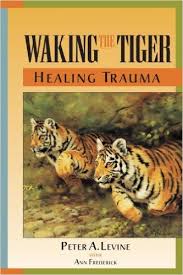
If children live with hostility, they learn to fight. If children live with fear, they learn to be apprehensive. If children live with pity, they learn to feel sorry for themselves. If children live with ridicule, they learn to feel shy. If children live with jealousy, they learn to feel envy. If children live with shame, they learn to feel guilty. If children live with encouragement, they learn confidence. If children live with tolerance, they learn patience. If children live with praise, they learn appreciation. If children live with acceptance, they learn to love. If children live with approval, they learn to like themselves. If children live with recognition, they learn it is good to have a goal. If children live with sharing, they learn generosity. If children live with honesty, they learn truthfulness. If children live with fairness, they learn justice. If children live with kindness and consideration, they learn respect. If children live with security, they learn to have faith in themselves and in those about them. If children live with friendliness, they learn the world is a nice place in which to live. Copyright © 1972 by Dorothy Law Nolte Excerpts from "Waking the Tiger Healing Trauma" by Peter Levine. This book is a must read for those that have experienced trauma in their lives. It will give you an idea of how trauma affects you psychologically and can help with healing and how to listen to the wisdom of your body. “In response to threat and injury, animals, including humans, execute biologically based, non-conscious action patterns that prepare them to meet the threat and defend themselves. The very structure of trauma, including activation, dissociation and freezing are based on the evolution of survival behaviors. When threatened or injured, all animals draw from a "library" of possible responses. We orient, dodge, duck, stiffen, brace, retract, fight, flee, freeze, collapse, etc. All of these coordinated responses are somatically based- they are things that the body does to protect and defend itself. It is when these orienting and defending responses are overwhelmed that we see trauma. The bodies of traumatized people portray "snapshots" of their unsuccessful attempts to defend themselves in the face of threat and injury. Trauma is a highly activated incomplete biological response to threat, frozen in time. For example, when we prepare to fight or to flee, muscles throughout our entire body are tensed in specific patterns of high energy readiness. When we are unable to complete the appropriate actions, we fail to discharge the tremendous energy generated by our survival preparations. This energy becomes fixed in specific patterns of neuromuscular readiness. The person then stays in a state of acute and then chronic arousal and dysfunction in the central nervous system. Traumatized people are not suffering from a disease in the normal sense of the word- they have become stuck in an aroused state. It is difficult if not impossible to function normally under these circumstances.” Peter Levine Another excerpt , “animals in the wild are not traumatized by routine threats to their lives, while humans, on the other hand, are readily overwhelmed and often subject to the traumatic symptoms of hyper arousal, shutdown and dysregulation. Trauma is a highly activated incomplete biological response to threat, frozen in time. For example, when we prepare to fight or to flee, muscles throughout our entire body are tensed in specific patterns of high energy readiness. When we are unable to complete the appropriate actions, we fail to discharge the tremendous energy generated by our survival preparations. This energy becomes fixed in specific patterns of neuromuscular readiness. The person then stays in a state of acute and then chronic arousal and dysfunction in the central nervous system. Traumatized people are not suffering from a disease in the normal sense of the word- they have become stuck in an aroused state. It is difficult if not impossible to function normally under these circumstances.” |
AuthorI love reading people's quotes . Here are some of my favorites and I keep adding to them. Archives
September 2025
Categories |


RSS Feed